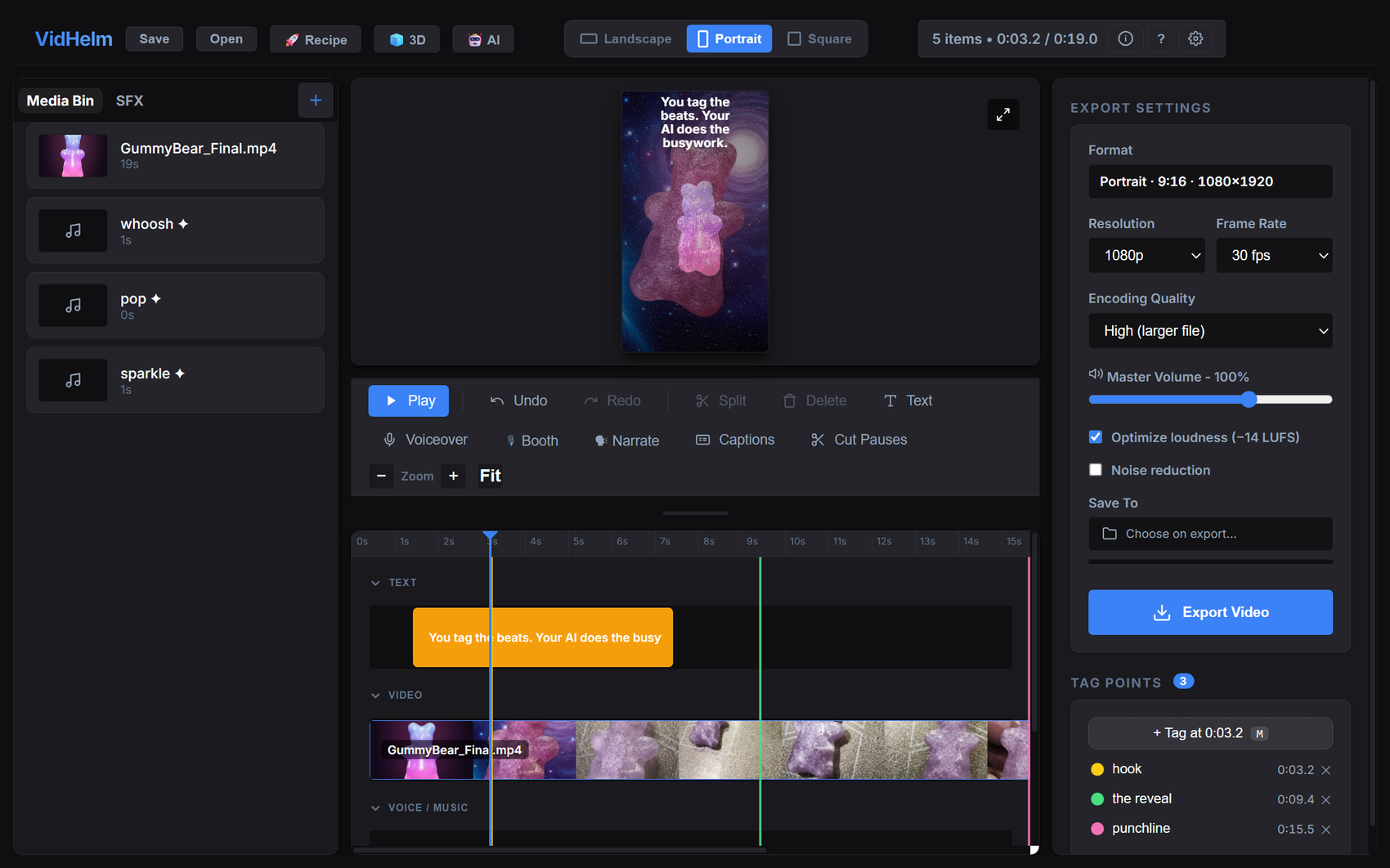
Import → tag the beats → tighten → narrate → sound → export. Every step has a fast path.
✂️
Cut Pauses, seamlessly
Finds every silent gap, or motionless stretch in silent footage, and splices it out with tiny crossfades. A rambling take becomes a tight one in one click.
🏷
Tag points
Tap M at every beat, the joke, the reveal, the pop. Tags are the language of the whole app: clips snap to them, SFX land on them, narration lines sync to them.
🎙
Karaoke booth
Paste your script and hit record: the video plays while your lines light up in time. One continuous take, no clicking between lines, lands straight on the voice track.
🗣
Cloned-voice narration
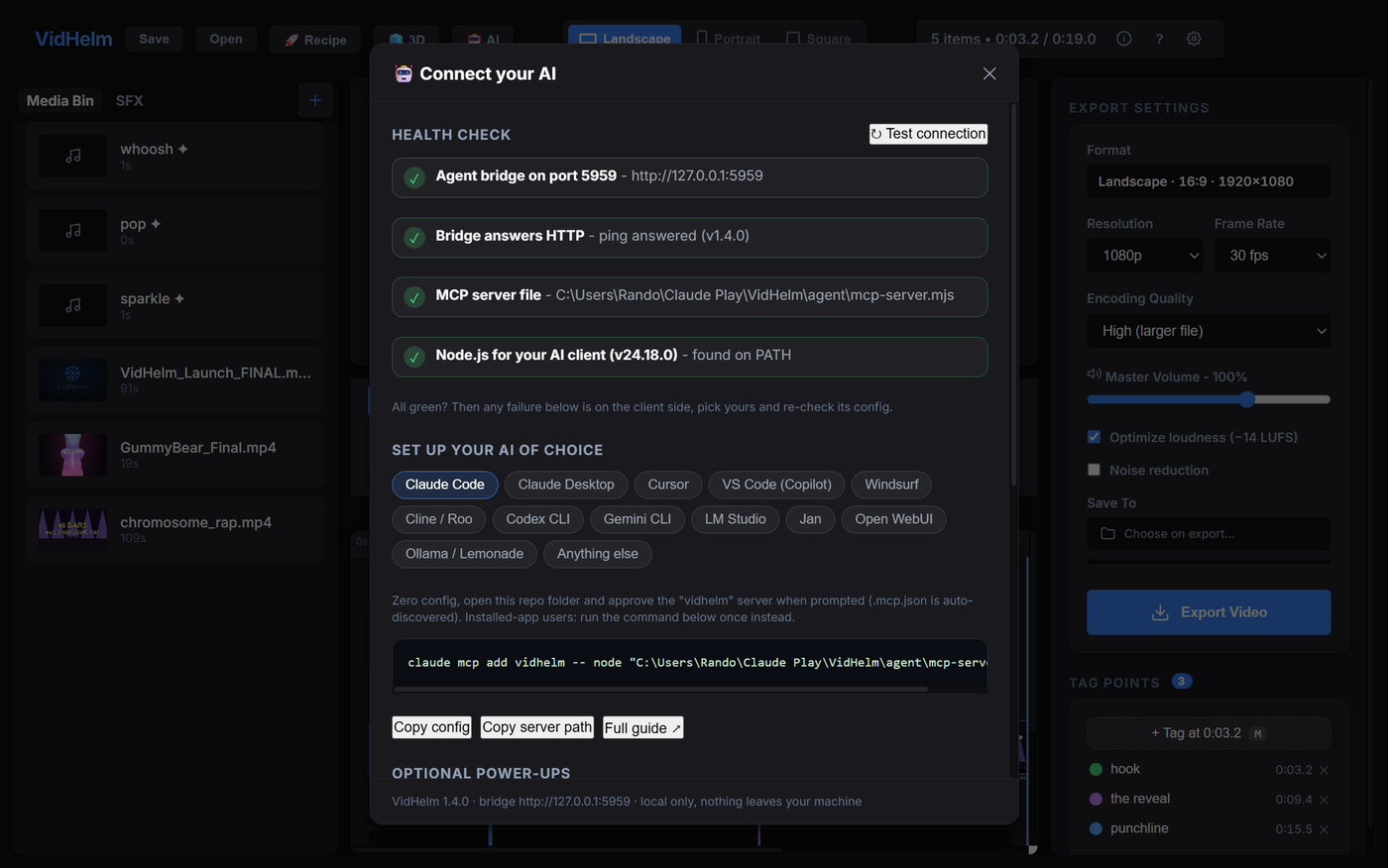
A setup wizard records about twenty seconds of your voice and installs a free local engine for you: XTTS-v2, or audio.cpp if you want no Python and licence-clean models. Lines land on your tag points automatically.
🔊
Sound effects, three ways
Thirteen classic effects synthesized on your machine, your own sounds dropped into a folder, or press record and make one yourself. Describe a sound in words and a local model can generate it too.
🧊
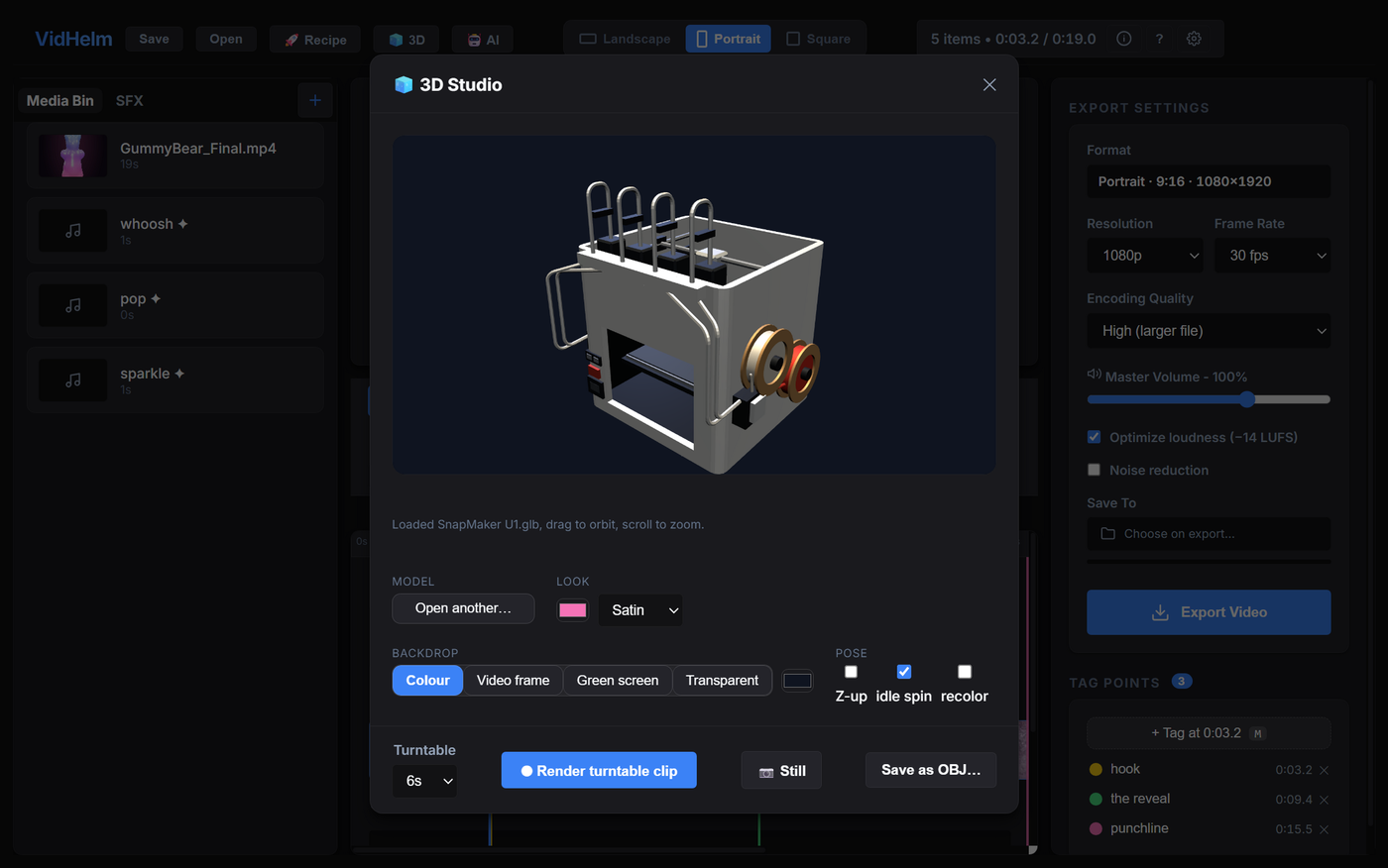
3D Studio
Drop in an STL, 3MF, OBJ or GLB, pose it, pick a colour and finish, and render a spinning turntable straight onto the timeline. Pick the green screen backdrop and your print floats over your footage.
📁
Project folders, no importing
Point VidHelm at one folder and every sub-folder inside it becomes a project. Dropping files in with Explorer is the import. Saving writes back to the same folder, so a project is something you can copy or hand to someone.
📝
Auto captions
On-device Whisper transcribes the whole timeline into styled captions, phrase or word-by-word karaoke mode. Nothing leaves your computer.
🎚
Audio done right
Labeled voice / SFX lanes, drawable volume automation, and one checkbox that masters the mix to YouTube's −14 LUFS target with peaks in check.
✅
Watch & Verify
Every export is auto-checked, loudness, true peak, black frames, sampled stills, so you never upload a broken render again.
🖼
Thumbnail builder
Sample frames from your video, pick one, type a catchy subtitle, out comes a 1280×720 thumbnail with your logo composited on.
📥
Imports just about anything
Video, audio and image formats are decided by FFmpeg rather than a fixed list, so unusual files still work. Anything unusable is refused with a plain-English reason instead of landing as a broken clip.